H₀ · 2024
Hubble constant from dark sirens
Using AI-based catalogs, he obtained the first and, at the time, most constraining Hubble constant measurement from dark sirens, during the fourth observing run of gravitational-wave detectors.
Brazilian Center for Physics Research
Artificial intelligence applied to physics.
Professor and Technology Researcher at CBPF, where he leads the Laboratory for Artificial Intelligence Applied to Physics (LAB-IA). His current work includes inverse modelling with Neural Posterior Estimation, Physics-Informed Neural Networks and agentic AI for problems in astrophysics and geophysics.

H₀ · 2024
Using AI-based catalogs, he obtained the first and, at the time, most constraining Hubble constant measurement from dark sirens, during the fourth observing run of gravitational-wave detectors.
GRB 230307
Co-author of the discovery of GRB 230307, a neutron star merger candidate.
S-PLUS
Spokesperson of the Southern Photometric Local Universe Survey and PI of the S-PLUS Transient Extension Program (STEP) and its gravitational-wave branch (STEP-GW).
Vera Rubin
Coordinates the TVS taskforce on LLMs and foundation models and the SLSC Strong Lensing Data Challenge (2024–2025).
2012 · 2020
One of the earliest applications of neural networks to strong gravitational lensing (2012) and the winning solution of the II worldwide lens finding challenge (2020).
Recognition
2025
Jacob Palis Award, from the Fulbright Commission and the Brazilian Academy of Sciences.
2024
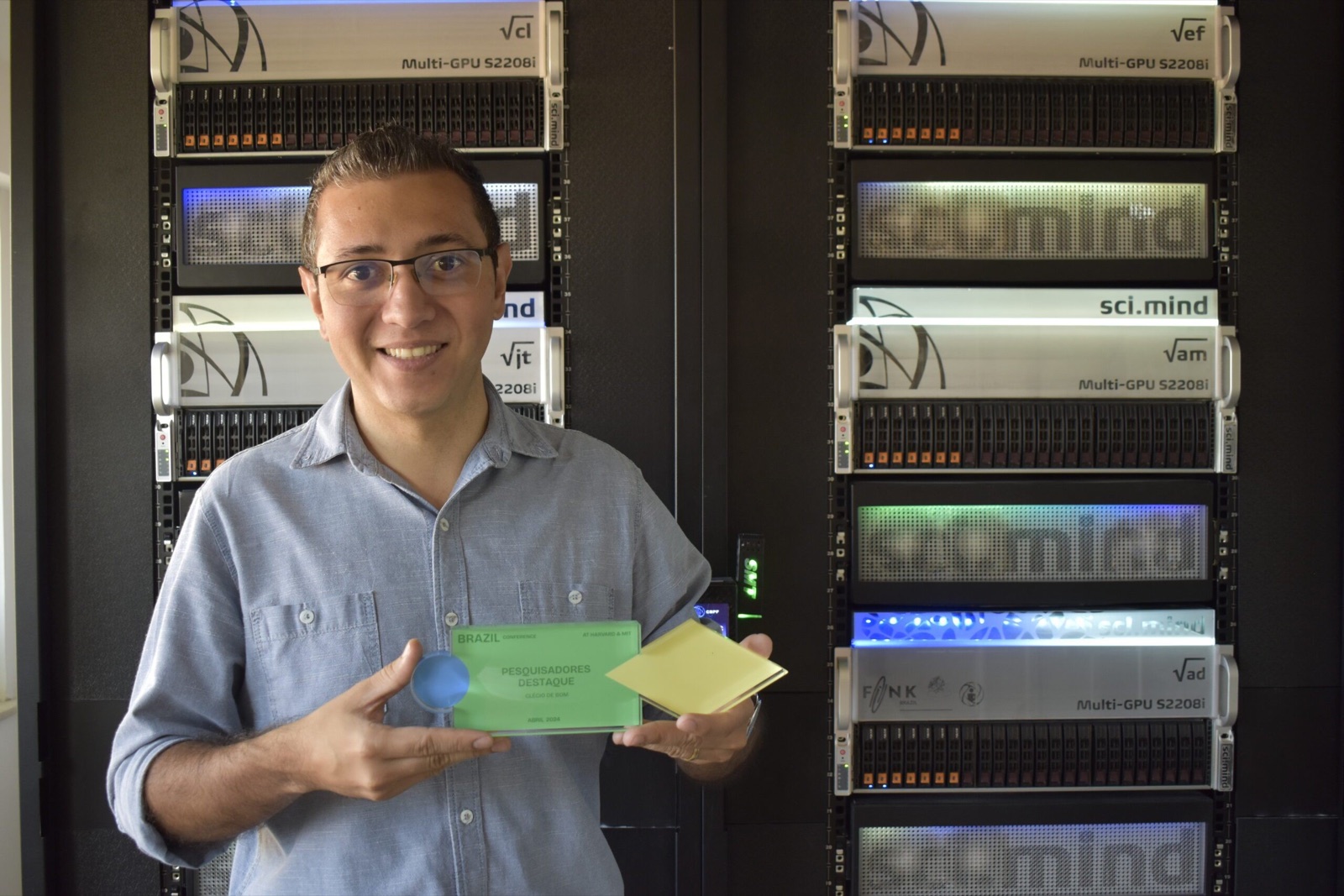
Researcher Prize at the Brazil Conference at Harvard and MIT.
2024
Elected Affiliate Member of the Brazilian Academy of Sciences.
Artificial intelligence methods to extract science from large astronomical and geophysical datasets.
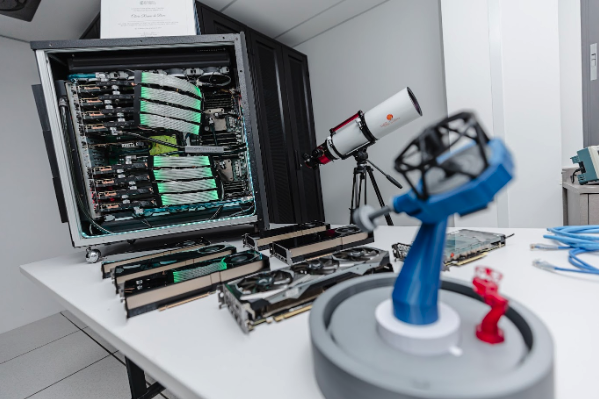

LAB-IA brings together research, development and innovation at CBPF, with high-performance computing infrastructure dedicated to artificial intelligence and projects ranging from astrophysics to industry.
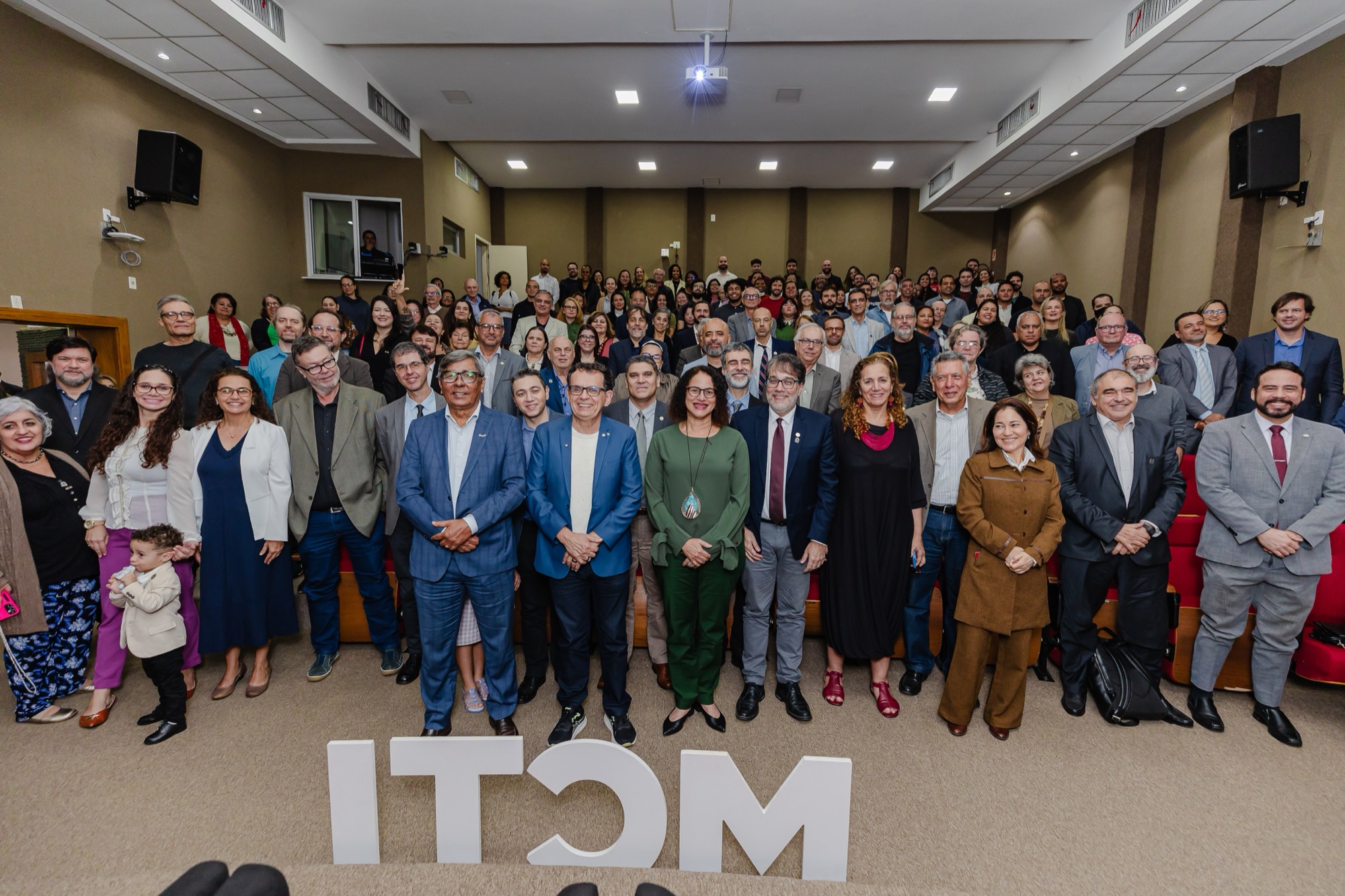
The system will receive the telescope’s detections, analyze the data within seconds and classify the events to help researchers identify which phenomena deserve further investigation.
Read story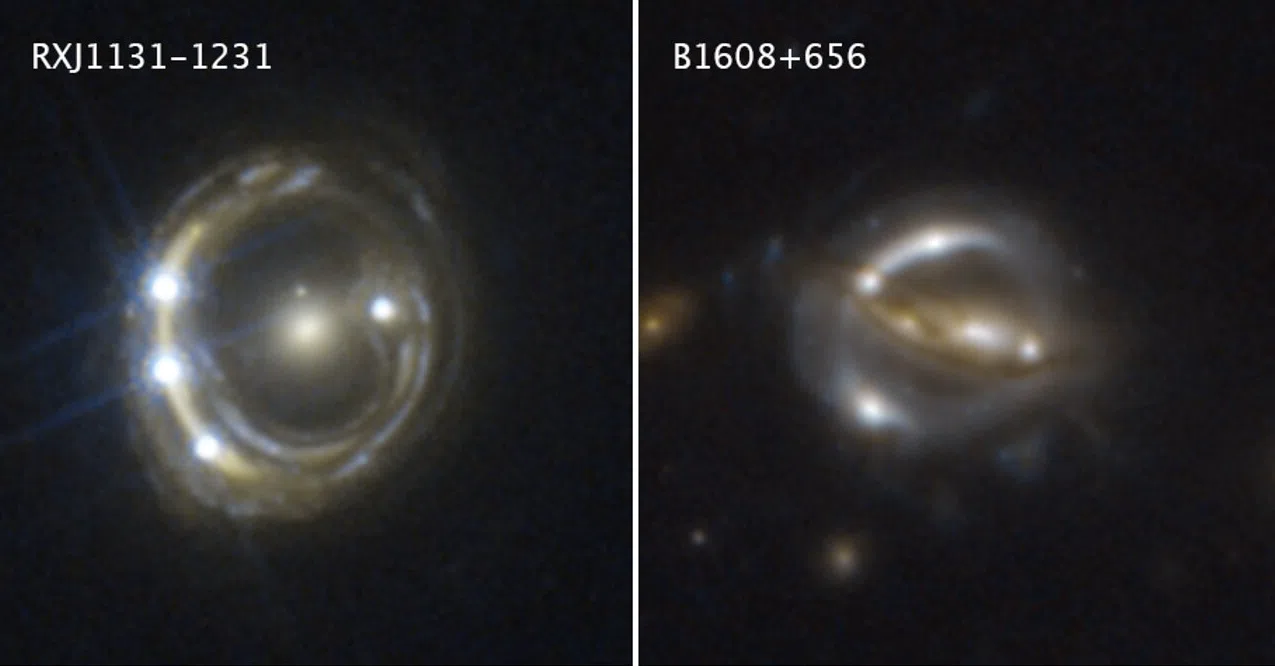
An opportunity for researchers and students to test their approaches and contribute to new solutions for analyzing gravitational lenses in the context of large astronomical surveys. Visit the website, learn about the challenge and take part.
Read story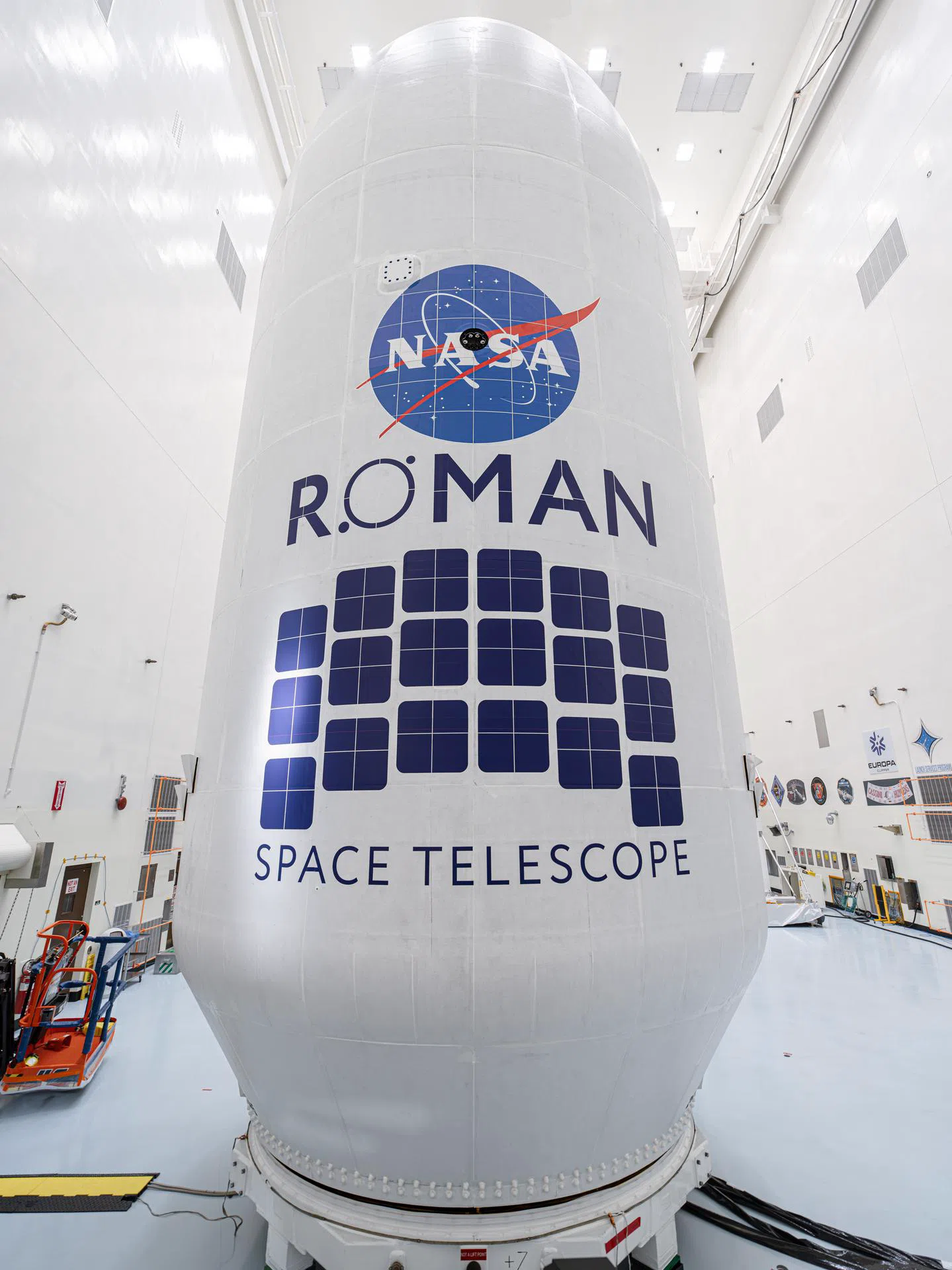
A next-generation instrument, Roman has a field of view at least 100 times larger than Hubble’s and was designed to address some of the mysteries of the universe.
Read storyLectures, notebooks, models and code, openly shared.
Courses on Big Data, Astroinformatics, Deep Learning and Physics, with slides, problem sets and tasks.
ExploreCosmology with Python and Deep Learning at the CBPF Schools, with slides, videos and notebooks.
ExploreTrained models, catalogs and student projects available for reproduction.
Explore